Computational chemistry · Undergraduate thesis · 2024
Tracing excited-state behaviour back to molecular structure.
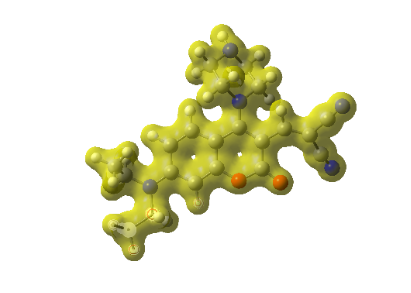
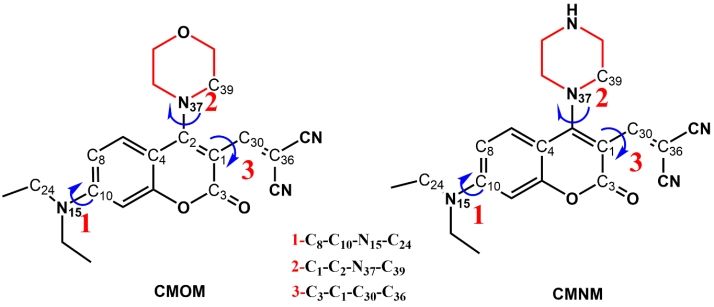
How do structural differences between CMOM and CMNM alter absorption, emission and excited-state decay?
My first sustained research project began with two closely related coumarin derivatives. Their structures looked similar, but reporting different optical behaviour was not enough; I wanted to understand where the difference came from.
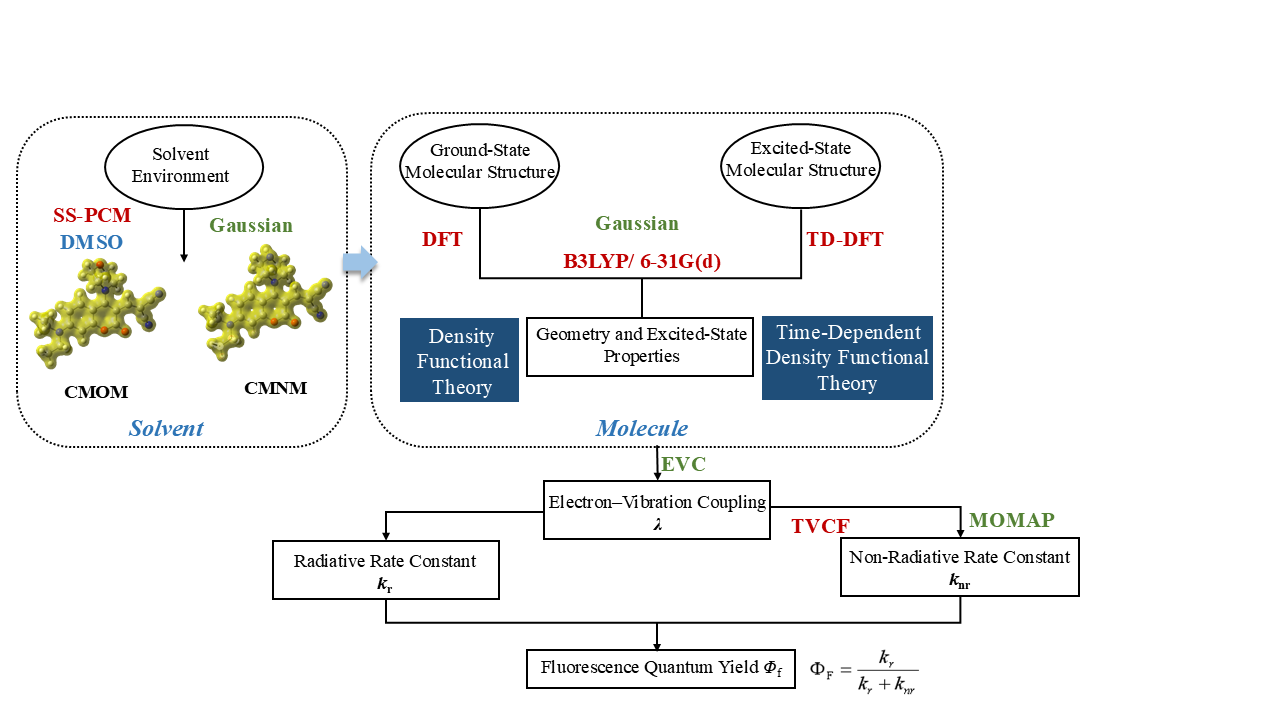
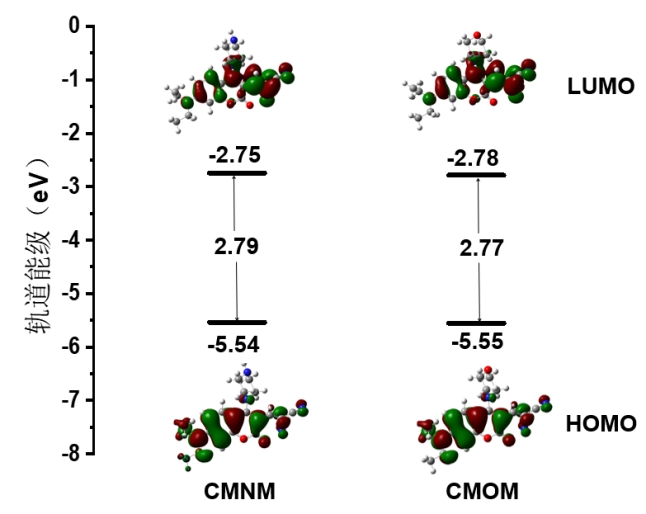
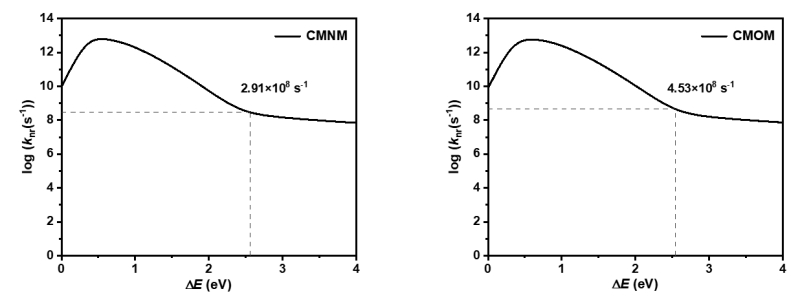
I optimised ground- and excited-state geometries, included solvent effects through a PCM model in DMSO, examined frontier orbitals and transition composition, and calculated radiative and non-radiative decay behaviour. Moving between structure, energy and rate taught me that a useful calculation is not the end of an analysis—it is one piece of a physical explanation.

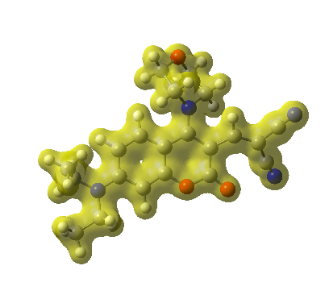
From geometry to rate
The explanation emerged by connecting several calculations.
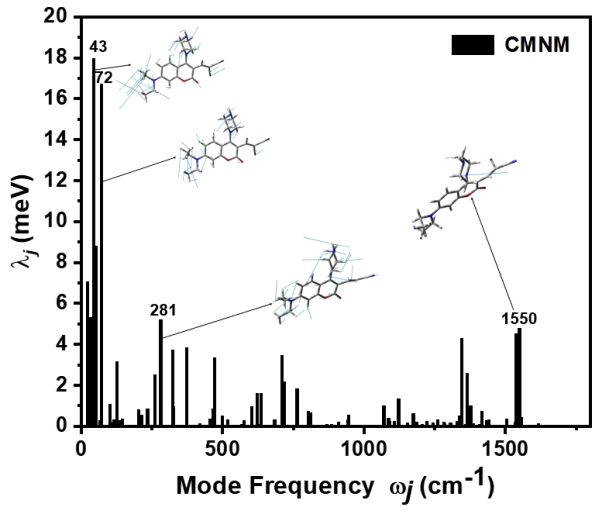
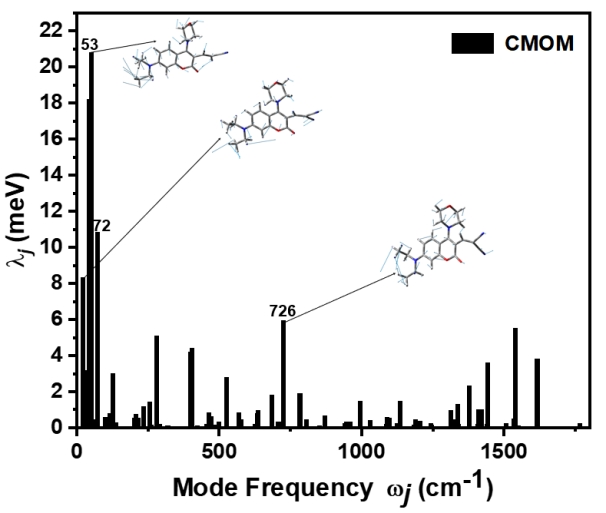
After comparing calculated absorption and emission with available experimental values, I examined where electronic density moved and how each molecule relaxed geometrically. Mode-resolved reorganisation energies then helped identify which motions mattered most.
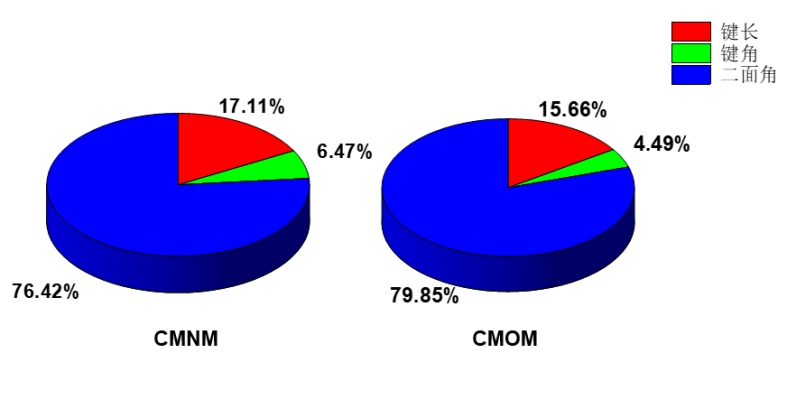
Key finding: changes in dihedral angles made the largest contribution to reorganisation energy in both molecules, providing a structural route to understanding their non-radiative behaviour.
This project gave me a foundation in electronic-structure calculations and, more importantly, a disciplined way to connect molecular structure with measurable behaviour: define the mechanism clearly, test it against evidence and state the limits of the result.